The “About Me” page (or About Page) is often one of the most misunderstood pages on a website.
Many female entrepreneurs write it like a biography: where they were born, what they studied, when they started their business. But the truth is, visitors aren’t looking for a personal story just for the sake of it. They are looking for a simple answer: “Can this person truly help me?”
💡 Here is the real paradox: your “About Me” page isn’t actually about who you are—it’s about how you can help your ideal client.
Here are the 4 key questions your page must answer to transform from a simple biography into a powerful conversion tool.
Are you in the right place?
One of the most common mistakes is starting the page with an overly generic personal introduction. Phrases like “I was born in…”, “I studied…”, “In 2018 I opened my business…” don’t help readers understand if they are in the right place.
The beginning of your page needs to welcome your ideal client. Whoever is reading should instantly feel recognized, as if the content is speaking directly to them and their specific struggles.
To do this, you can use this copywriting mathematical formula:
I help [Target] achieve [Result] without [Common Problem]
This type of opening works because it puts the person on the other side of the screen at the center of attention, immediately clarifying if your goals align.
Why should I trust you?
Once you’ve captured their attention, you reach the most delicate point: trust. This is where storytelling comes into play—but not as a aimless personal tale. It must have a precise purpose.
You don’t need an academic resume or an endless list of experiences. What truly works is sharing your “turning point”: the exact moment you realized what you wanted to do and why.
Use this section to explain your work philosophy and the journey that led you to develop your specific approach. The goal is to show why your experience is relevant to the client: this is where empathy and authority are built simultaneously.
What makes you different from the rest?
In the small business market, competition is high, but the difference often lies not in the services themselves, but in how they are perceived. And this is exactly where brand values come into play.
You can structure this section in two ways, depending on your style:
The Conceptual Approach (Values): Present 3-4 key brand values in a clear, graphic layout (e.g., Clarity, Simplicity, Intentionality, Trust).
The Visual Approach (Behind the Scenes): Use authentic photographs, details of your workspace, and elements that show the real person behind the screen.
This isn’t just about “decorating” the page; it’s about humanizing your brand. People who see themselves in your values or your aesthetic will find it much easier to trust you.
What should I do next?
One of the most frequent mistakes on an “About” page is the lack of a clear conclusion. The user arrives, reads, gets inspired… and is then left without a clear direction.
Every single page on your website must guide the visitor toward the next step. If your story has built a connection, don’t let it fade away. Insert a clear Call to Action (CTA), choosing from:
- “Work with me” or “Discover my services” (if you are aiming for a direct conversion)
- “Start your project” (to guide them toward a form or questionnaire)
- Newsletter subscription (to keep nurturing the relationship)
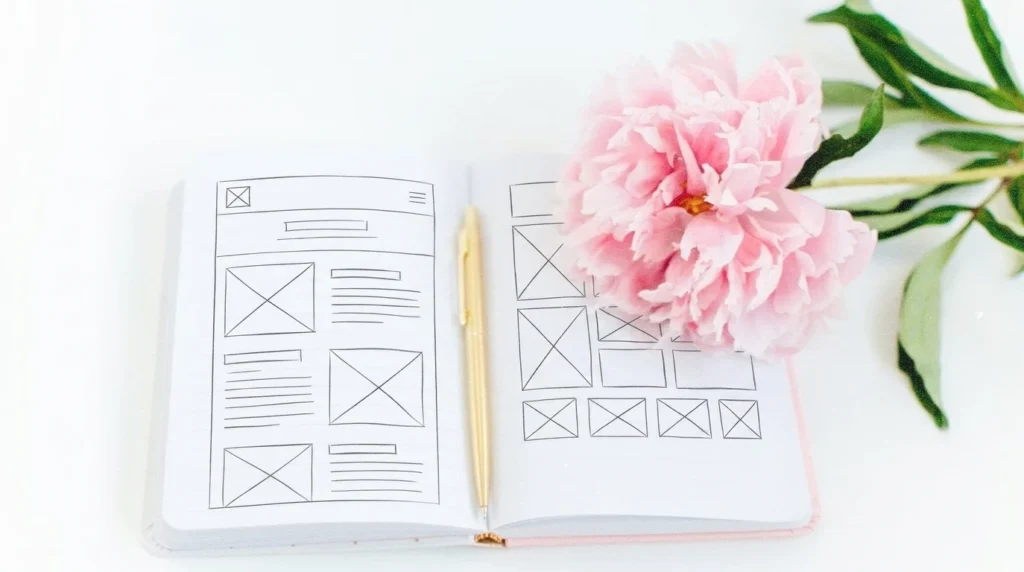
About Me Page Structure: The Designer’s Touch and Visuals
Beyond the copy, design plays a fundamental role in how this page is perceived. To make it visually flawless, take care of these three details:
- Professional yet authentic photography: Avoid stiff or overly “corporate” poses. Opt instead for natural images, with a direct gaze into the lens and a welcoming expression.
- Featured quotes: Break up heavy blocks of text with key phrases, mini-manifestos, or your values written in a large font to create rhythm and give the reading layout some breathing room.
- The final signature: A detail as simple as it is effective. A handwritten, digitized signature adds a human, artisanal touch that closes the page beautifully.
Conclusion
Your “About Me” page is not a monument to your career—it is a tool for connection. When you shift the focus from “this is who I am” to “this is what I can do for you,” your website transforms from a static presentation into an active ecosystem that welcomes, convinces, and converts.
Ready to make your online presence reflect the true value of your work?
If you feel like your current site is holding you back, I can help you build a consistent identity that aligns with your goals.
Contact me for a consultation or explore my Services to see how we can elevate your online presence together.
Did you enjoy this approach? Sign up for my Newsletter to receive design and strategy insights directly in your inbox.